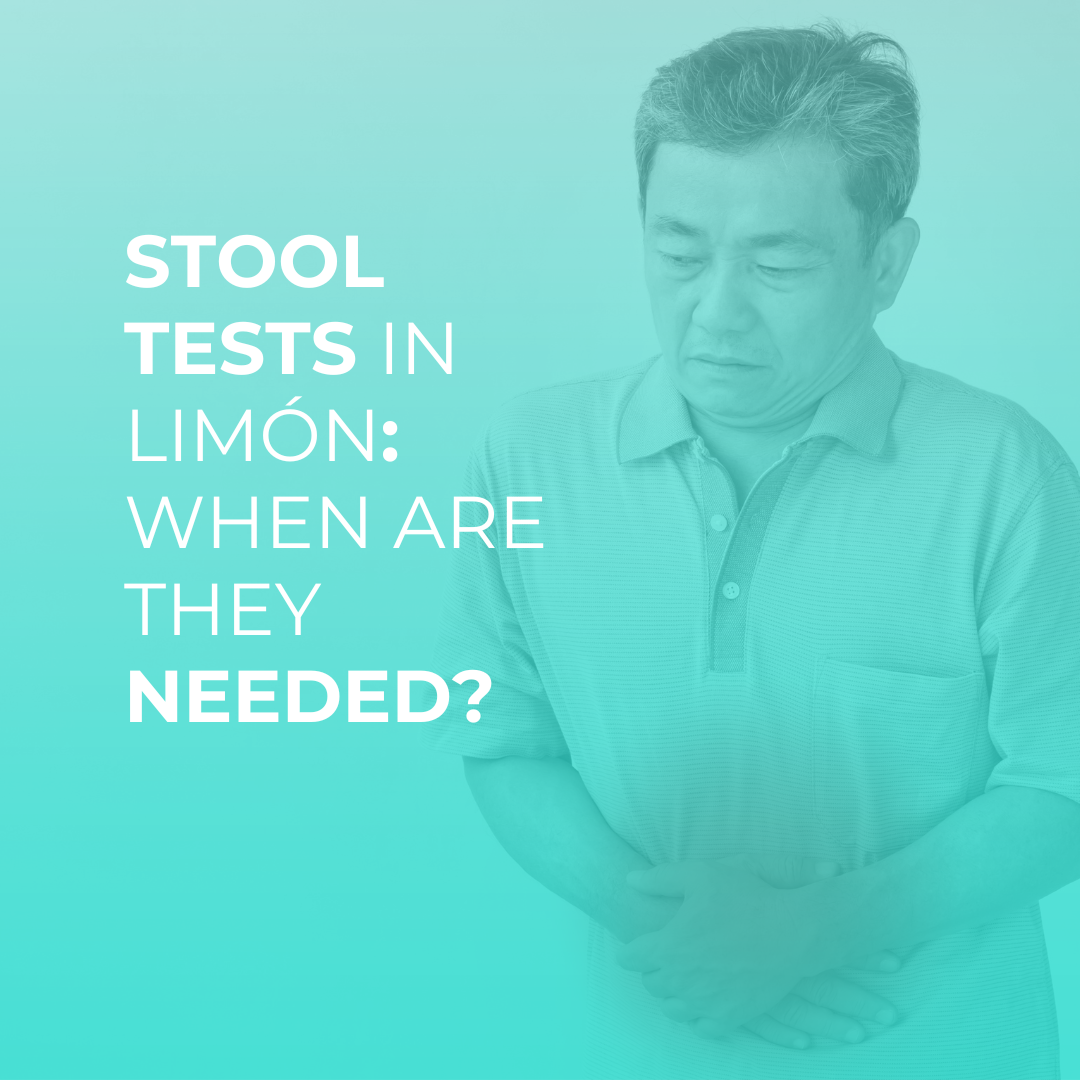
Diarrhea that is not improving: when to seek care and which stool tests may help
Stool tests in Limón: when may they help?

When diarrhea is not getting better, you may wonder whether you need a stool test. The answer depends on how long you have been ill and whether you have symptoms such as fever, blood in your stool or dehydration. A healthcare professional can assess your condition and decide which test, if any, would be useful. At Bioclinic, we perform stool tests at our Limón centro and Puerto Viejo locations when they are requested as part of that assessment.
Diarrhea is described as persistent when it lasts 14 days or longer, but you should not wait that long to seek advice if warning signs appear. Here, we explain when to seek care, what different tests can investigate and how to collect a sample if one is requested.
Stool tests in Limón: when may they help?
Diarrhea can be associated with viruses, bacteria, parasites or other causes. To guide an assessment, it helps to know when symptoms began, how they have changed and what other symptoms you have. Recent antibiotic use may matter. So might the fact that several people became ill after sharing a meal.
Not every episode calls for testing. A healthcare professional considers whether a result could help identify a cause or change your care. For example, clinical guidance recommends investigating certain germs when diarrhea occurs with fever, bloody or mucus-containing stool, severe abdominal pain or signs of serious illness. If symptoms continue, other possible causes may also need consideration.
When should you seek medical advice?
If you are an adult, contact a healthcare professional when diarrhea lasts more than two days. Seek care sooner if you see blood in your stool, develop a high fever or severe abdominal pain, or vomit so often that you cannot keep fluids down. Urinating much less than usual can be a sign of dehydration. Ask for medical advice earlier if a baby or young child has diarrhea.
While arranging care, replacing lost fluids is important. Oral rehydration solution is recommended for mild to moderate dehydration associated with diarrhea. If you cannot drink or keep fluids down, you need a medical assessment. Delivering a sample to a laboratory does not replace that care.
What is the difference between prolonged and persistent diarrhea?
Clinical guidance describes diarrhea lasting 7 to 13 days as prolonged and diarrhea lasting 14 to 29 days as persistent. These terms describe duration; they do not identify a cause. They also do not mean that you should wait until day 7 or day 14 before asking for help if you feel unwell.
When symptoms continue, a healthcare professional may look for an infection or consider other possibilities. Tell them how long you have been ill and whether your symptoms have changed. This information helps them choose an appropriate test. Requesting a test without first establishing what needs to be investigated may leave your main question unanswered.
Which stool tests might be requested?
Different tests look for different things. Depending on your symptoms and medical history, a healthcare professional might request:
- Ova and parasite testing: looks for intestinal parasites or their eggs. It may be considered when a parasitic cause is suspected, particularly if symptoms continue.
- Stool culture: looks for certain bacteria in a stool sample. Fever, bloody stool and severe abdominal pain are among the details that may guide the decision to investigate a bacterial cause.
- Other targeted tests: sometimes another cause needs to be investigated. Clinical guidance, for example, considers C. difficile testing for certain people who develop diarrhea after antibiotic use or in connection with healthcare.
A stool culture does not replace a parasite test, and none of these tests can detect every possible cause. Results need to be considered alongside your symptoms and medical assessment. If diarrhea continues after a test has not identified a cause, seek medical advice again. Your healthcare professional can decide whether further assessment is needed.
How to collect a stool sample
If a test is requested, use a container intended for stool samples. You can obtain one from our laboratory or a pharmacy. Keep urine, water and toilet paper out of the sample. Do not collect stool directly from the toilet water or deliver it in a plastic bag.
Our sample collection instructions ask you to write your name and identification number on the side of the container, not on its lid. Before collecting the sample, ask us when to deliver it and whether your requested test has any additional instructions.
A figure for Limón and how we can help
Costa Rica’s Ministry of Health recorded 33,650 reported cases of acute diarrheal illness in Limón province in 2025. This is a public health surveillance figure for that year. It does not mean that visiting Limón causes diarrhea, and it does not establish that an outbreak is happening now. We include it as context for a health issue that also affects our community.
At Bioclinic, we perform general stool examinations and stool cultures. If a healthcare professional has requested a test, we can explain how to collect and deliver your sample at our Limón centro or Puerto Viejo location. If you develop bloody stool, signs of dehydration or another warning sign, seek medical care without waiting for a result.
BLOG
Leptospirosis in Limón: Prevention and Symptoms
September 17, 2026

Vitamin B12: signs you should not ignore
May 13, 2026
Glycemic curve: how your body manages sugar
May 06, 2026
Month 5 is here: Take care of your health
May 01, 2026
What is gonorrhea and how does it affect your health?
April 14, 2026